
Tech Tips: Ecoboost oiling with JEM-Sport!
Posted by Leo Minard on 31st Dec 2025

DISCLAIMER: The information provided on this blog is for educational and informational purposes only. JEM-Sport is not responsible for any engine damage, loss, or injury resulting from the use or misuse of the information provided herein. We recommend consulting with a professional technician before making mechanical changes to your vehicle.
In this blog, you will learn about LSPI and why it's important to run the right oil in your EB! As a bonus, this blog will touch on oil weights and why they are important. Enjoy!
At JEM-Sport, we specialize in making the EcoBoost platform perform in ways the factory never intended. Whether you’re maintaining your daily driver or finishing up an EcoBoost swap on a race car, choosing the right oil is the single most important thing you can do to keep your engine in one piece.
Here are the most common questions we get at the shop regarding oil, viscosity, and engine safety.
What oil rating should I be looking for?
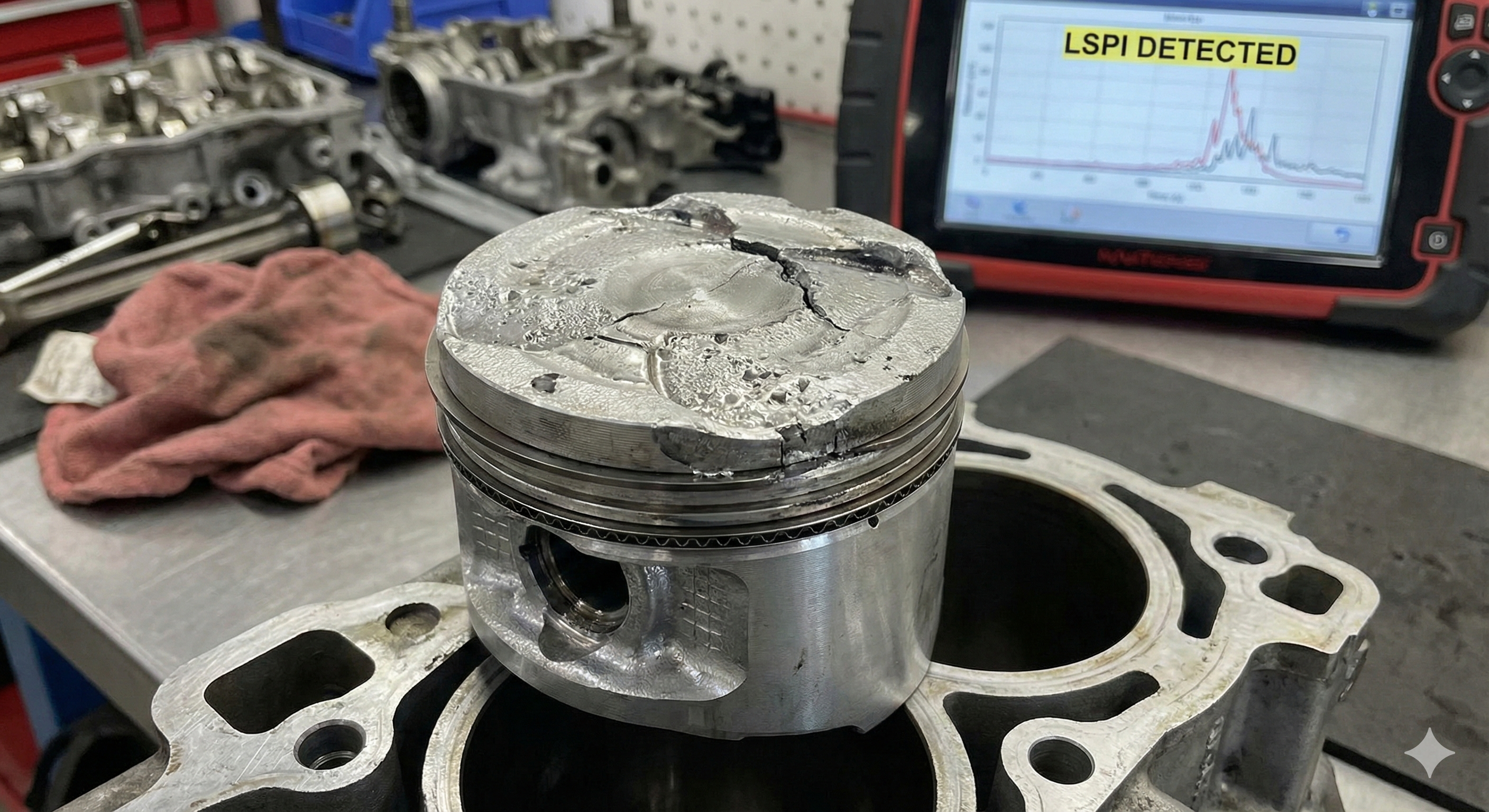
For any turbocharged, direct-injected engine—especially the EcoBoost—you must use oil that is API-SP, SN-Plus, or SN rated.
These ratings aren't just a suggestion. They were specifically developed to combat Low-Speed Pre-Ignition (LSPI). Older oil formulations used high levels of calcium detergents, which were found to trigger premature ignition in turbo engines, often leading to "blown" engines. The newer SP and SN-Plus ratings use a different chemical balance to keep your pistons safe under boost.
What is Low-Speed Pre-Ignition (LSPI)?
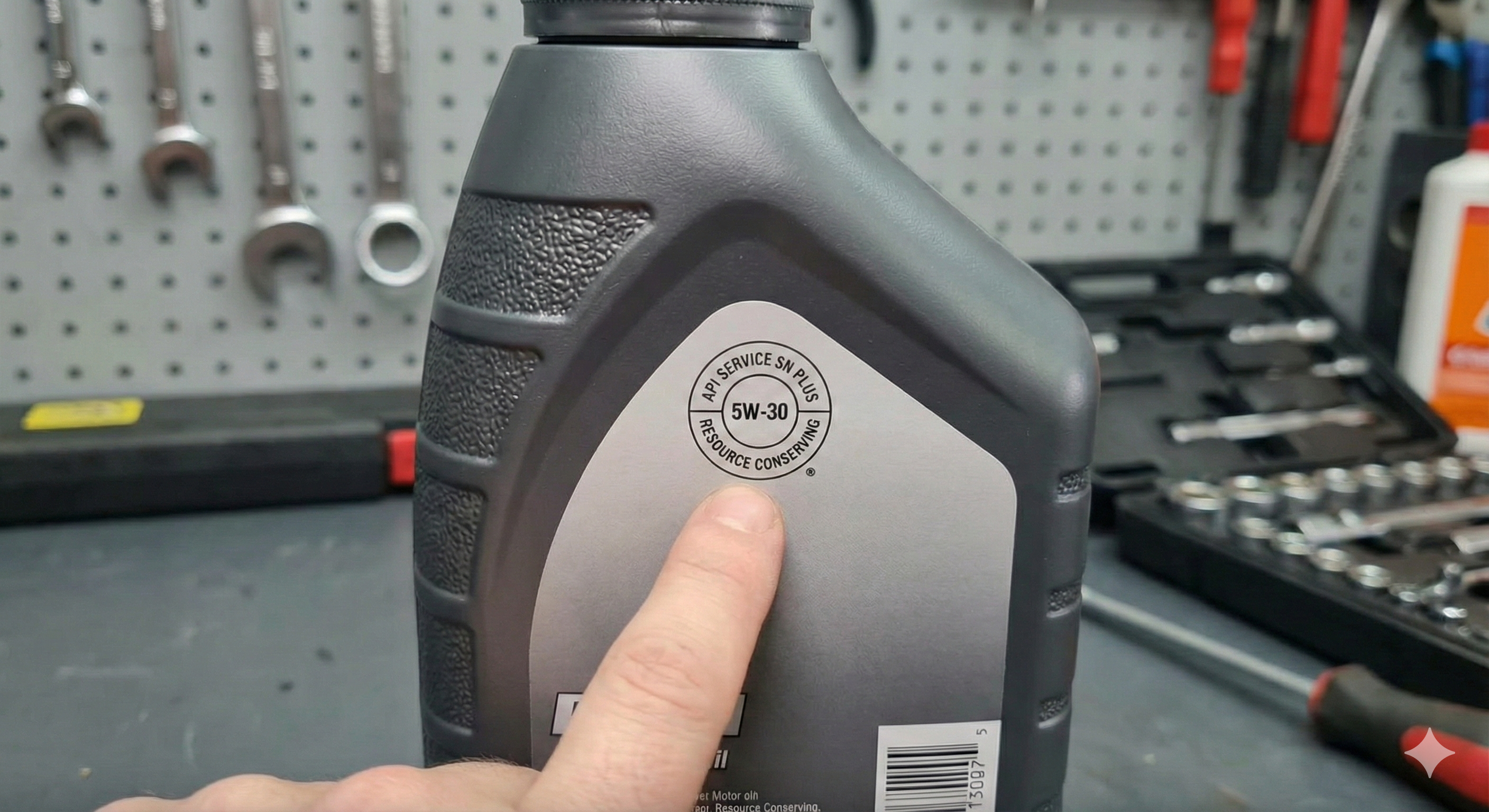
LSPI is a "super-knock" event that happens when you’re at low RPMs but high load (think: flooring it in 5th gear to pass on the highway). A phenomenon where the air-fuel mixture ignites before the spark plug fires, often occurring at low speeds under high load. It creates a massive pressure spike that can shatter a piston or bend a rod in a single cycle.
What brand do you recommend?
In today's world, there are plenty of great options. Personally, we have had great success with Royal Purple, but we feel confident that anything with the proper rating and weight for your application will work perfectly for you.
What do the numbers in "5W-30" actually mean?
It’s a common myth that oil gets thicker as it heats up. In reality, all oil gets thinner as it gets hot. The numbers represent how the oil behaves at two different extremes:
- The "5W" (Winter): This is the cold-flow rating. We need this to be low (5) so that on a cold start, the oil is thin enough to immediately reach the turbo bearings and the top of the cylinder head.
- The "30": This is the viscosity at operating temperature. It tells us how much "body" the oil has once the engine is warmed up.

Can I run 5W-40 instead of the factory 5W-30?
Yes. While 5W-30 is the OEM standard, many high-performance and track-day builds you see around the world benefit from thicker oil weights.
As oil gets very hot (like during a track session or spirited canyon drive), it thins out, which can lead to a drop in oil pressure. Stepping up to a 40-weight provides a slightly thicker film of protection and more stable pressure under extreme stress.
Why not just run a "heavy" 50 or 60-weight oil for maximum protection?
This is a dangerous trap. Modern EcoBoost engines are built with extremely tight bearing clearances. If you use an oil that is too thick (high viscosity), it cannot flow through those tight gaps fast enough.
Oil doesn't just lubricate; it carries heat away from the bearings. If the oil is too thick to flow properly, heat builds up, and you actually increase your risk of spinning a bearing. We generally recommend staying within the 30 to 40-weight range unless the engine was specifically blueprinted for something heavier.

How often should I change my oil?
If your vehicle's common commute is under normal driving circumstances, then the OEM-rated interval is what you should follow. Even if your car sees mild abuse, we recommend still following the OEM-rated interval. If you have a dedicated race car, the best advice we can give is to monitor your oil and use your best judgment as to the current state of your oil as you go. There are too many variables in a single track day for us to properly recommend a "common interval."