Table of Contents
Popular Transmission Options
Engine Mounting
Driver Display
PCV Systems
Ecoboost PCV Systems
How do I route my 1st/2nd gen 2.0 & 1st gen 2.3 PCV System?
-This will 100 percent depend on how your Ecoboost swap project will be treated. If you are going to have just a cruiser with occasional burnout, then you can route the system in OEM form. If you are going to be beating on the car consistently, then we need to make some changes to ensure minimal oil bypass through the PCV System.
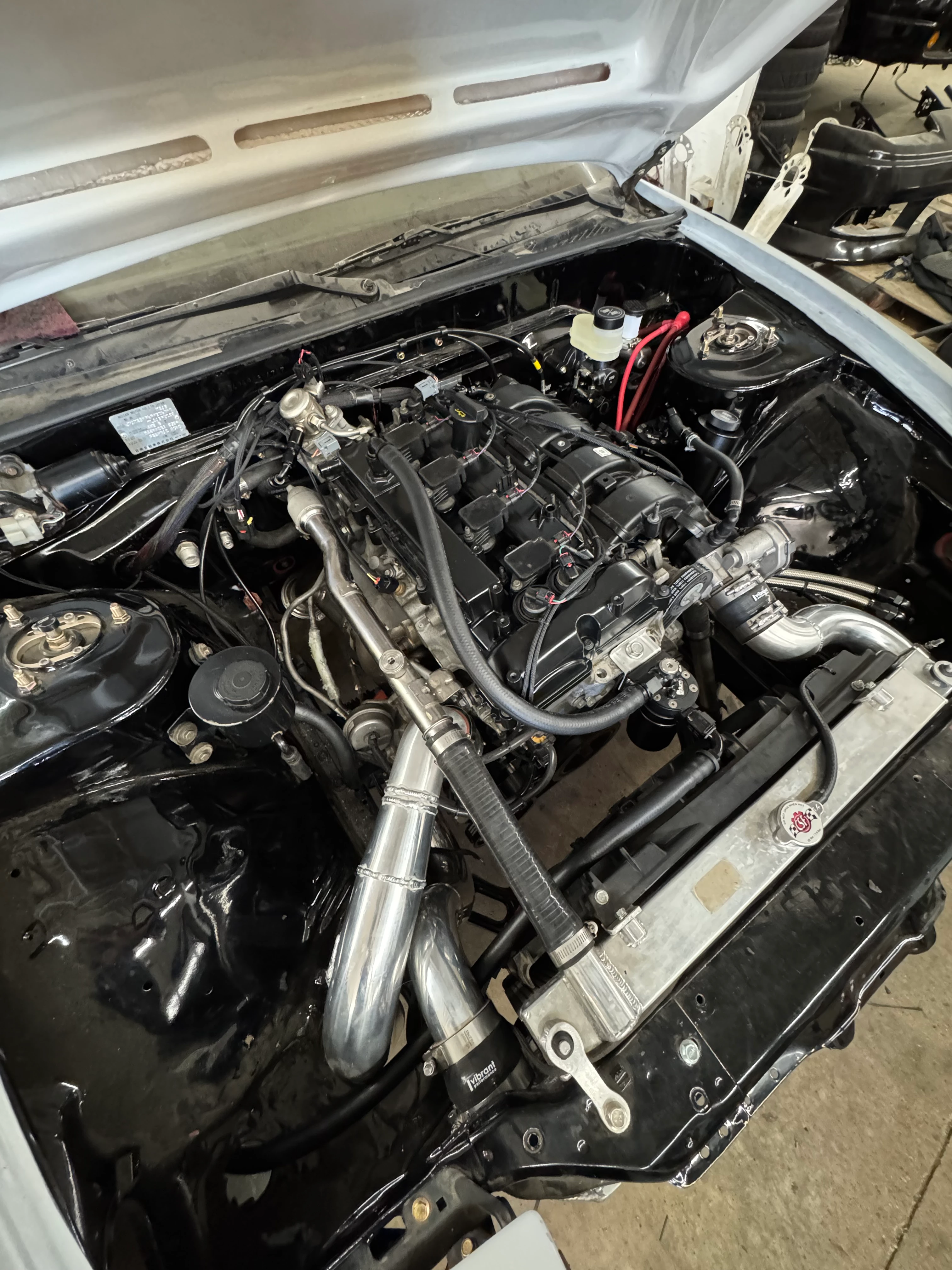
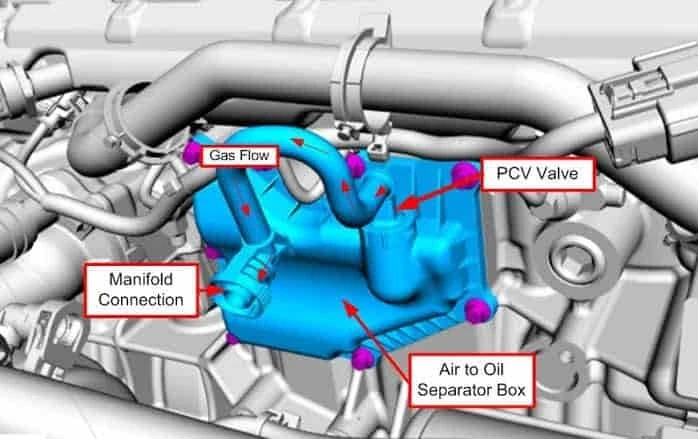
-"I will be using the car as a cruiser with the occasional burnout."
-Please reference the image for proper routing. You will be running the factory baffle plate from the side of the engine to the intake manifold. There is a check valve built into the OEM hose, so do not worry about boost pressure entering the side of the engine.
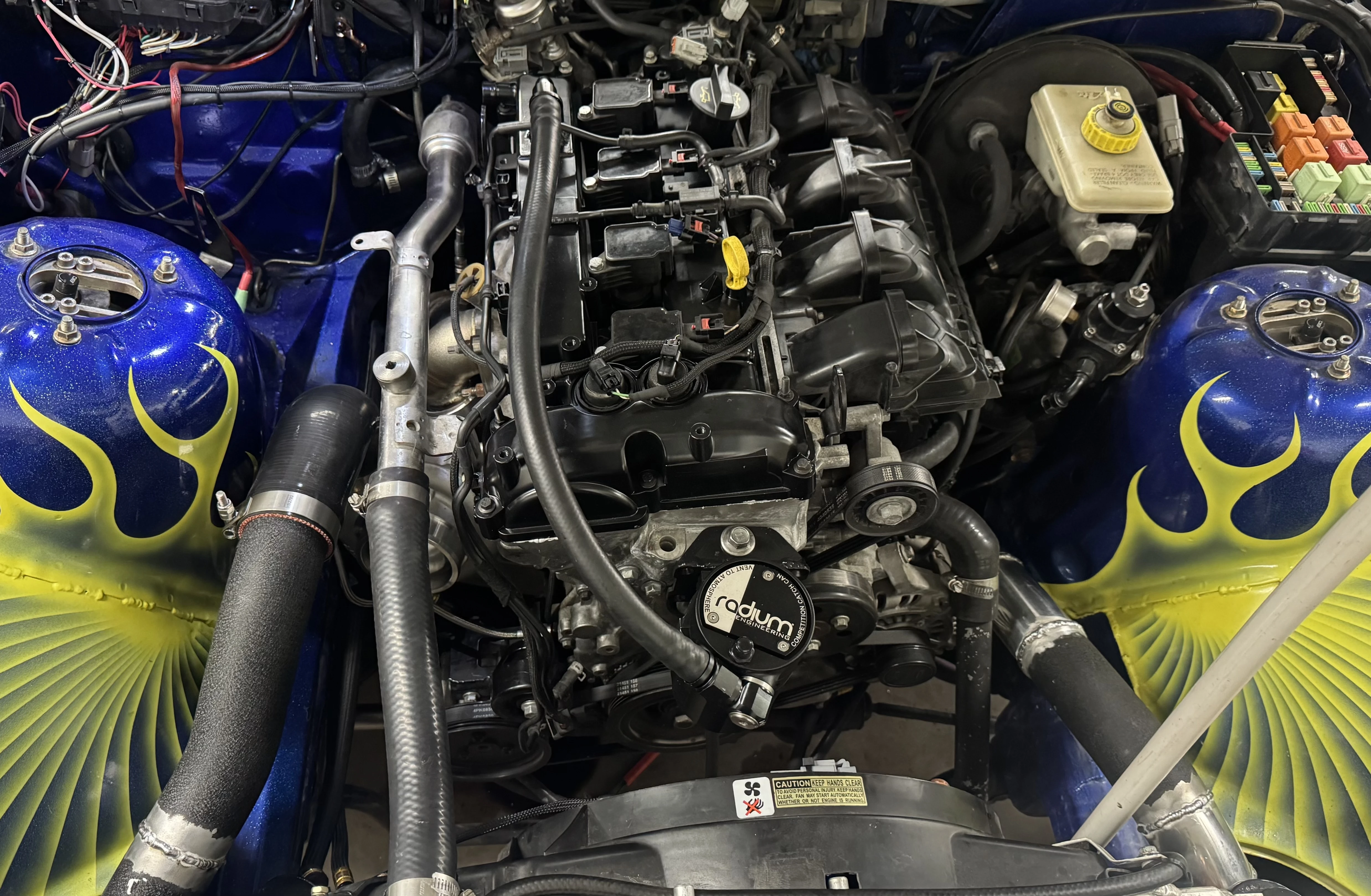
-For the valve cover hose, you should route it to a catch can (VTE) and then back into the turbo air filter inlet. The catch can will help keep fuel and oil particles from entering the turbo.
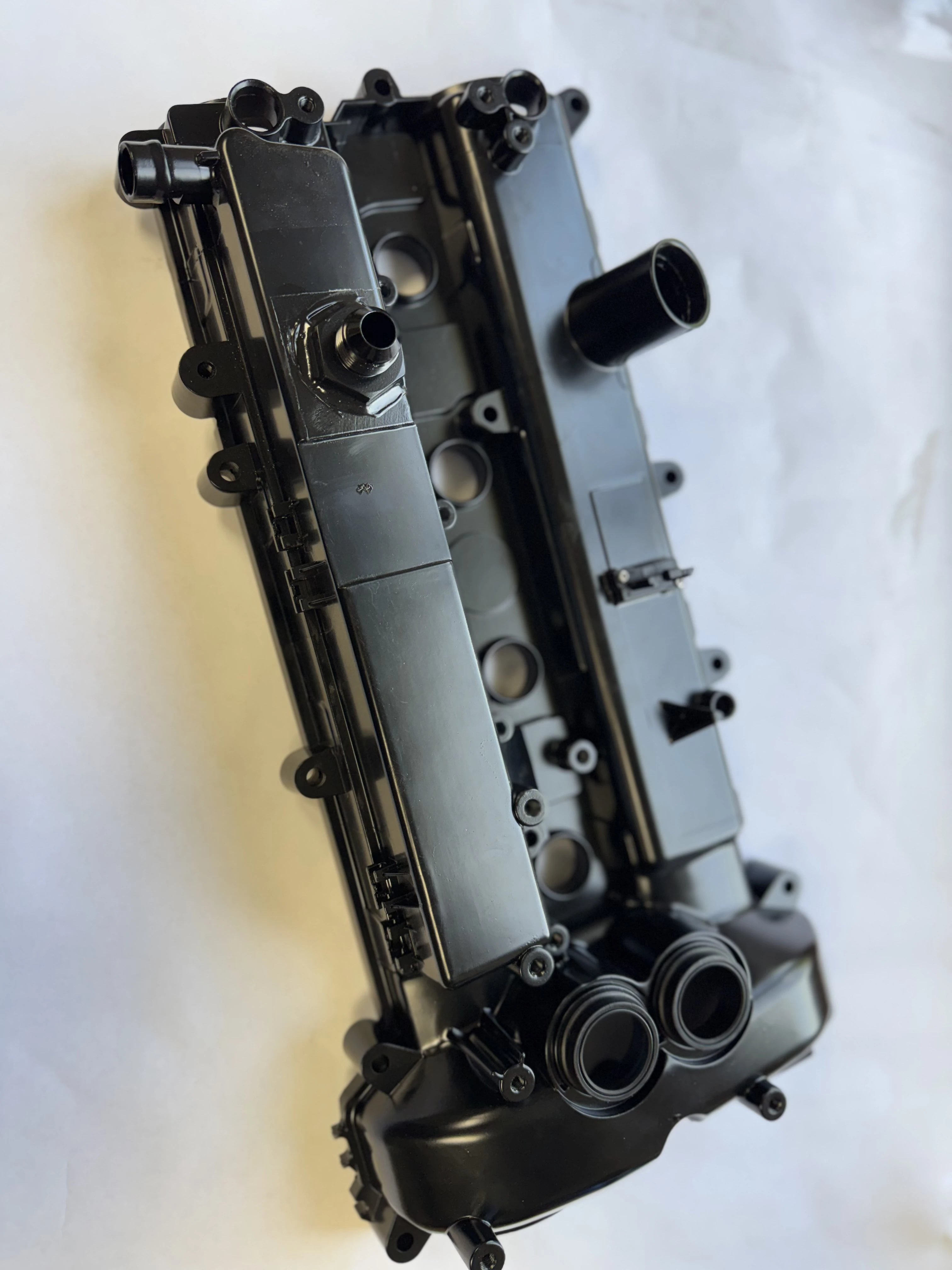
-"I will be beating on the car consistently."
-Please note that we are currently working on selling plug-and-play kits, but in the meantime, I will explain what is needed to route your catch can setup to minimize oil bypass.
-You will need to purchase an aluminum Ecoboost valve cover so that you can remove the baffle and install a -10 fitting to route a -10 hose to your catch can. We recommend using a VTA (Vent to atmosphere) can from the valve cover, ideally a 2-port, so you can run the overflow hose under the car; if the can overflows at any time, the oil will be routed away from potential fire hazards.
-For the crankcase plate, you can route this just like OEM, but we recommend using Radium's PCV Baffle plate at a minimum. If you want to take it a step further, we have years of testing going from the Radium plate to a VTE(Vent To Engine) Catch can and then back into the intake manifold. This allows the can to catch excess oil or fuel that gets through the radium plate. In our experience, there will be very little to no bypass.